





Skip to content
← Back home

You Are Not Alone

YANA

A Friend for Your Mental Health - Anytime, Anywhere

MY ROLE

Sole Product Designer

Project Overview

  • Engaging UI

    Employed clean visual design & intuitive.

  • Affordable Therapy

    Offering Minis, Affordable Support group Therapies.

  • Self Emotional State Awareness

    We designed engaging mood check-ins, along with self-help tools

  • Reduced Stigma around asking help

    Added open journaling, peer-shared stories & relatable therapist intros.

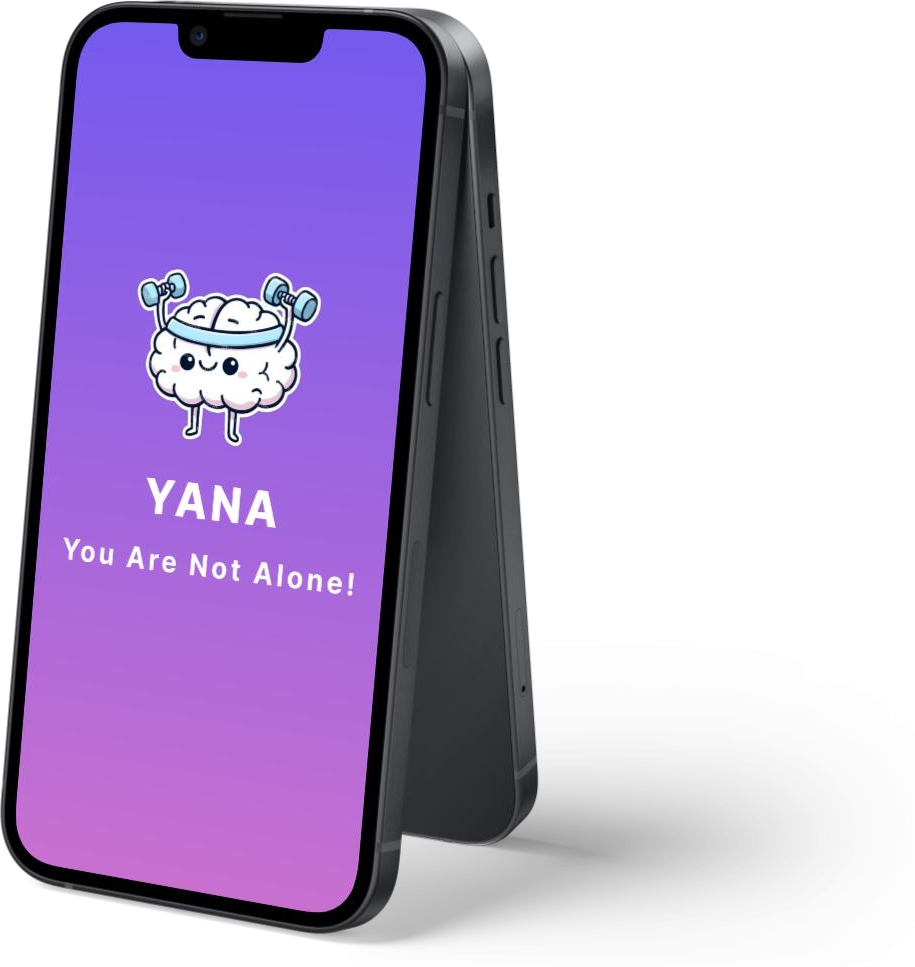
YANA app splash screen: a cheerful brain mascot lifting dumbbells above the words “YANA — You Are Not Alone!”

YANA in 60 seconds

From finding the words to finding support: check in at your own pace, reflect and connect, and explore therapy when you're ready.

1:00NarratedCaptions on screen

Design Process

  1. Discover
  2. Define
  3. Design
  4. Develop
  5. Deliver
01

DISCOVER

What is Mental Health?

Mental health is a state of well-being where individuals can cope with everyday stresses, recognize their abilities, work productively, and contribute to their communities

Why GOOD mental health matters?

Good mental health supports well-being, strong relationships, and meaningful contributions to society by helping individuals cope with challenges and work productively.

Ignoring it can lead to stress, anxiety, burnout, poor performance, and strained relationships. It also causes significant social and economic losses, with productivity costs often exceeding the cost of care.

Mental Health Policies and Initiatives

  • The National Mental Health Policy of 2014 aims to promote mental health, ensure access to mental health care, and reduce stigma associated with mental illness.
  • Initiatives like Tele MANAS and the National Suicide Prevention Strategy have been launched to enhance access to mental health services.

How Has Mental Health Awareness and Support Evolved in India?

Challenges :-

  • Despite these efforts, there is a significant treatment gap, with many individuals lacking access to necessary mental health care.
  • Stigma and financial barriers continue to prevent timely treatment for many.
  1. Historical Challenges

    - High stigma

    - Lack of awareness

  2. Turning Point: Deepika Padukone’s

    Public Disclosure (2015)

    - Sparked national conversations

  3. COVID-19 Exposed the Crisis

    - Increased mental health issues

    - Lack of accessible & affordable mental health services

  4. Need for Holistic Support

    - Policy reforms

    - Awareness campaigns

    - Community-driven interventions

  5. Future Priority: Stigma-Free & Accessible Mental Healthcare

    - Affordable therapy

    - Digital & community-based support

    - Policy-backed reforms

Mental Health Data

Mental Health Stigma in India
0 %20 %40 %60 %80 %80%2015–201667%2024
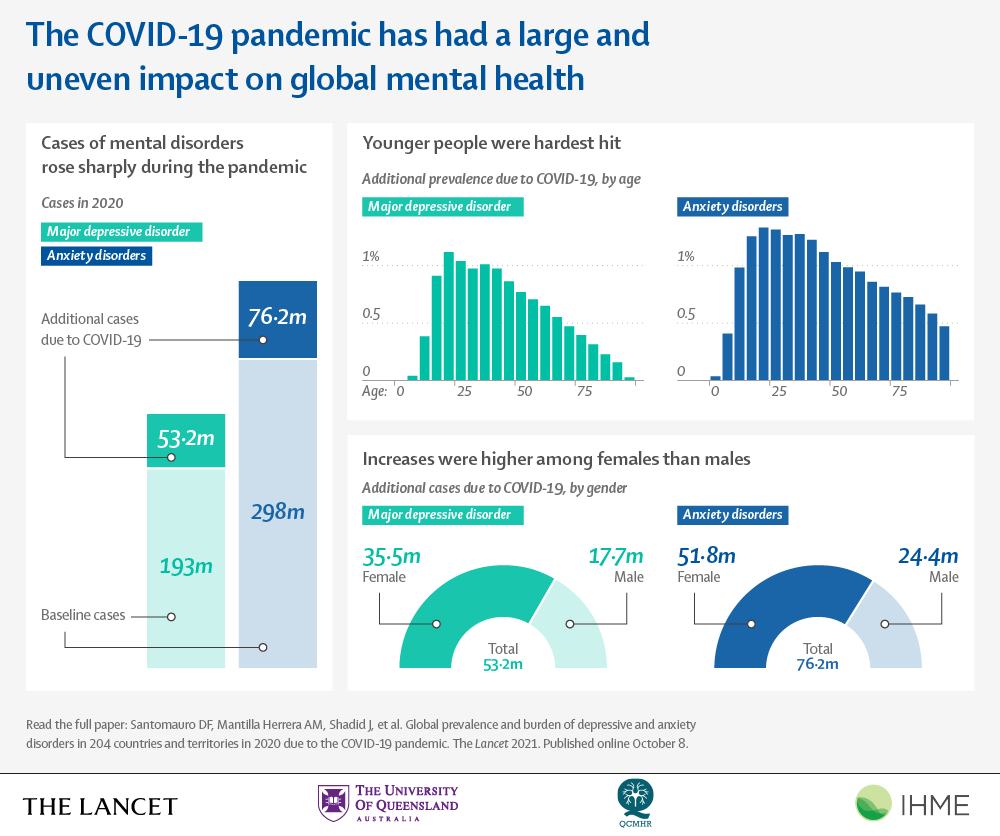
Infographic from The Lancet (Santomauro et al., 2021): “The COVID-19 pandemic has had a large and uneven impact on global mental health.” Cases of major depressive disorder rose from 193m baseline by 53.2m additional cases, and anxiety disorders from 298m by 76.2m; younger people were hardest hit, and increases were higher among females (35.5m and 51.8m) than males (17.7m and 24.4m).

Economic and Social Impact

  • The economic loss due to mental health conditions in India between 2012 and 2030 is projected to be USD 1.03 trillion.
  • The age-adjusted suicide rate is 21.1 per 100,000 population, highlighting the severity of untreated mental health issues.

Target Audience18-29

  • High Mental Health Risk
  • Openness to Help
  • Student Crisis
  • Digital First

Can Mental Health Conditions Be Addressed Without Support?

WHO said :-

“Neglecting professional support can lead to worsening symptoms and reduced quality of life ! ”

Reason

India faces a major mental health workforce gap:

  • Only 0.75 psychiatrists per 100,000 people
  • Even fewer clinical psychologists and counselors
  • Group therapy requires skilled facilitators, who are often unavailable or overburdened

Hence , Shortage of Trained Professionals

FACTS

"Unless one realises that he or she is unwell or sick, how would they seek treatment? Often there is a huge gap between the time when symptoms are identified and treatment is initiated, thus aggravating the complexities," he said.
"The treatment cost is quite high in the private sector while at government setups there is a lot of rush and people do not want to go through that inconvenience," said Asthana who was the chief coordinator of the mental health festival organised recently by Mental Health Foundation (India) along with AIIMS-Delhi and Deepak Chopra Foundation, USA.

The survey of 2,800 student-respondents drawn from 30 colleges was carried out by Mpower, a mental healthcare initiative of a trust. It highlights the severe lack of mental health support system in educational institutions.

15.0%58.0%2.0%25.0%
  • Seek Professional Help
  • Confided in Friends
  • Counsellors
  • Miscellaneous
The Following data percentage is calculated individually on scale of 100 and made in one pie chart for reference

Group Therapy in India

  • Community-based models (peer-led emotional support)
  • Integrated health program (like WHO’s mhGAP)
  • NGO & Urban initiatives (youth-focused support groups)

But major challenges persist:

  • Urban-centric access, with rural areas left behind
  • Cultural stigma limiting openness and participation
  • Shortage of trained facilitators
  • Lack of standardization across services
  • Poor public infrastructure for safe, effective sessions
Feature comparison of mental health platforms: Wysa, MindPeers, InnerHour/Amaha, The Alternative Story, Your DOST
Features/ PlatformsWysaMindPeersInnerHour/AmahaThe Alternative StoryYour DOST
Self-help tools (CBT, journaling)
AI chatbot for mental support
Access to therapists (1:1)
Mood tracking
Progress & habit tracking
Group therapy sessions(Limited)
Community support forums
Open journaling (social sharing)
Voice journaling
Safe space for self-expression
Culturally relevant content

Key Insights from Secondary Research:-

  1. 01 High Vulnerability

    • Young adults (18–29) experience the highest rates of anxiety, depression, and mental distress.
    • The COVID-19 pandemic worsened mental health for this group.
  2. 02 Mental Health Literacy Gaps

    • Most students can't recognize warning signs (e.g., 69% miss suicide signs).
    • 94% haven’t accessed mental health first-aid resources.
  3. 03 Stigma and Low Awareness

    • Over 80% of Indians with mental health issues don't seek help due to stigma, lack of awareness, and misidentification of symptoms.
    • Only 15% of students seek professional help, preferring friends over counsellors.
  4. 04 Access Barriers

    • Private care is costly; public services are overcrowded.
    • Government programs exist but are underused due to poor awareness or complexity.
  5. 05 Consequences of Inaction

    • Delayed help leads to worsening symptoms, poor academics, social problems, and rising suicide rates (1.3 lakh in 2016 to 1.64 lakh in 2021).

Survey Insights

A Google Survey Form was conducted counting 50 responses

Questions Asked

  • Which age group do you belong to?
  • How would you rate your overall mental well-being in the past month?
  • How often do you experience feelings of stress or anxiety?
  • Have you experienced feelings of distress, sadness, or anxiety without a clear or identifiable reason?
  • If yes, what did you do to try and understand these feelings?
  • What are the biggest challenges you face when seeking mental health support?
  • Do you feel comfortable discussing your mental health with others?
  • What type of mental health support would you prefer?
  • How much do you feel that social pressures affect your mental state?
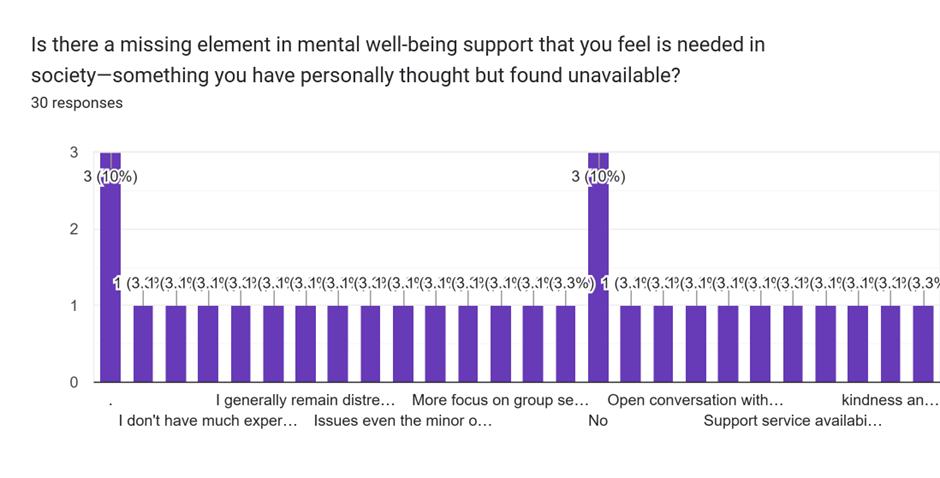
  • Is there a missing element in mental well-being support that you feel is needed in society—something you have personally thought but found unavailable?
493829
  • Anxiety (49.1%)
  • Career Stress (38.2%)
  • Relationships (29.1%)
*The data percentage is calculated individually on scale of 100 and made in one pie chart for reference*
010203040506050.958.332.729.118.223.6
  • Awareness Gap
  • Willingness to Join Therapy
  • Relatability Matters - Join if peers their age also attend.
  • Online + Anonymous
  • Some Prefer 1-on-1
  • Trust Issues - wouldn’t attend at all — stigma and fear persist.

User Persona Data

From the following 2 questions recording 50 responses each personas are created in order to understand users more effectively

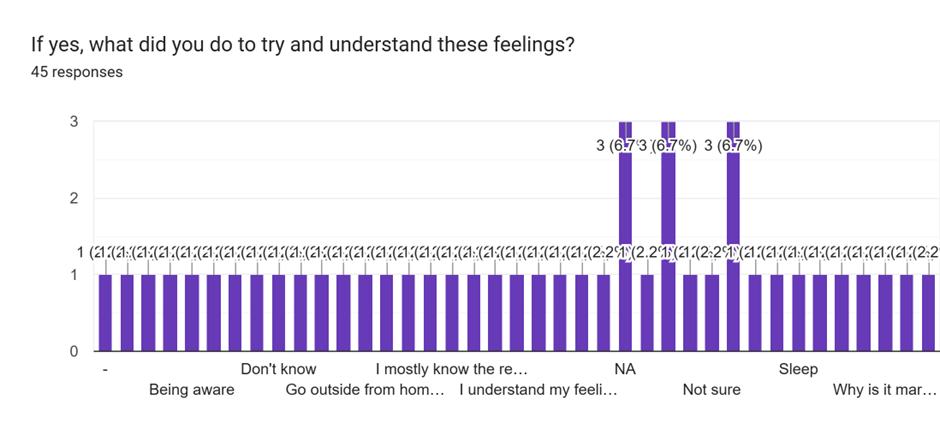
Google Forms bar chart — “If yes, what did you do to try and understand these feelings?”, 45 responses. Three answers were given by 3 respondents each (6.7%); every other answer was given by 1 respondent (2.2%). Visible answer labels include “Being aware”, “Don't know”, “Go outside from hom…”, “I mostly know the re…”, “I understand my feeli…”, “NA”, “Not sure”, “Sleep” and “Why is it mar…”.
Google Forms bar chart — “Is there a missing element in mental well-being support that you feel is needed in society—something you have personally thought but found unavailable?”, 30 responses. Two answers were given by 3 respondents each (10%); every other answer was given by 1 respondent (3.3%). Visible answer labels include “.”, “I don't have much exper…”, “I generally remain distre…”, “Issues even the minor o…”, “More focus on group se…”, “No”, “Open conversation with…”, “Support service availabi…” and “kindness an…”.
Ayushi Sen, smiling and looking to the side, seated indoors in a pink outfit

Ayushi Sen

20 years, Female, Pune(Maharashtra)

“Healing begins the moment you feel safe to be yourself”

Personality

  • Ask for other’s validation.
  • Go to different websites to find like minded people and often disappoints herself.
  • Make it difficult for people to know real her.
  • Often forgets things as a lot goes on in her mind

Goals

  • To lead a happy and stress free life.
  • Be emotionally strong and not depend on others for her own wellness.
  • Do good in professional life and be financially independent.

Frustrations

  • Difficulty in taking decisions on her own always have a fear of being judged because of which developed self doubt.
  • Mood often make it difficult for her to achieve deadlines
  • Give lot of love to others but do not receive the same which makes her unhappy.
  • Got betrayed in love and friendship

Behaviors and Strategies

  • Needs a person who understand her.
  • Need to have her confidence built up once again.
  • Need to open up to people.
Aniket Singh, smiling with arms crossed, standing outdoors in a striped shirt

Aniket Singh

27 years, Male, Gurugram(Haryana)

“Seeking Safety in Silence: A Journey Toward Emotional Freedom.”

Personality

  • Desires to feel genuinely heard and understood.
  • Struggles to express feelings due to limited emotional vocabulary.
  • Needs guidance from someone who truly knows how to support.
  • Craves clarity in understanding her own emotions.
  • Financial security is also an important concern.

Goals

  • Gain control over emotional well-being.
  • Lead a happy, stress-free life.
  • Build connections with supportive and non-judgmental people.
  • Provide a better future for her children.

Frustrations

  • Unsure how to express mental health struggles.
  • Fear of social judgment and stigma.
  • Experiences frequent emotional breakdowns.
  • Seeks help but feels resources are inaccessible or too expensive.

Behaviors and Strategies

  • Build a safe community where he can openly share feelings.
  • Need affordable therapy options.
  • Create spaces with like-minded, empathetic peers who accepts without judgment.
02

DEFINE

Problem Statement

Young people in India (aged 18–29) often struggle to recognize, express, and manage their mental health challenges due to stigma, limited mental health literacy, high costs, and inaccessible professional support.

There is a lack of safe, affordable, and relatable pathways that guide users from self-help to community support to professional care in a stigma-free environment.

Problem Framing Through HMW

  1. Self-Help & Early Recognition

    How might we encourage young adults to recognize and reflect on their mental health struggles early?

  2. Community & Stigma-Free Sharing

    How might we design a digital space that promotes safe, stigma-free sharing of lived experiences?

  3. Group Therapy Integration

    HMW make group therapy more approachable, inclusive, and accessible to young people in India?

  4. Access to Therapy & Support

    HMW create a seamless journey from self-help to peer support to professional care within one platform?

03

Ideation

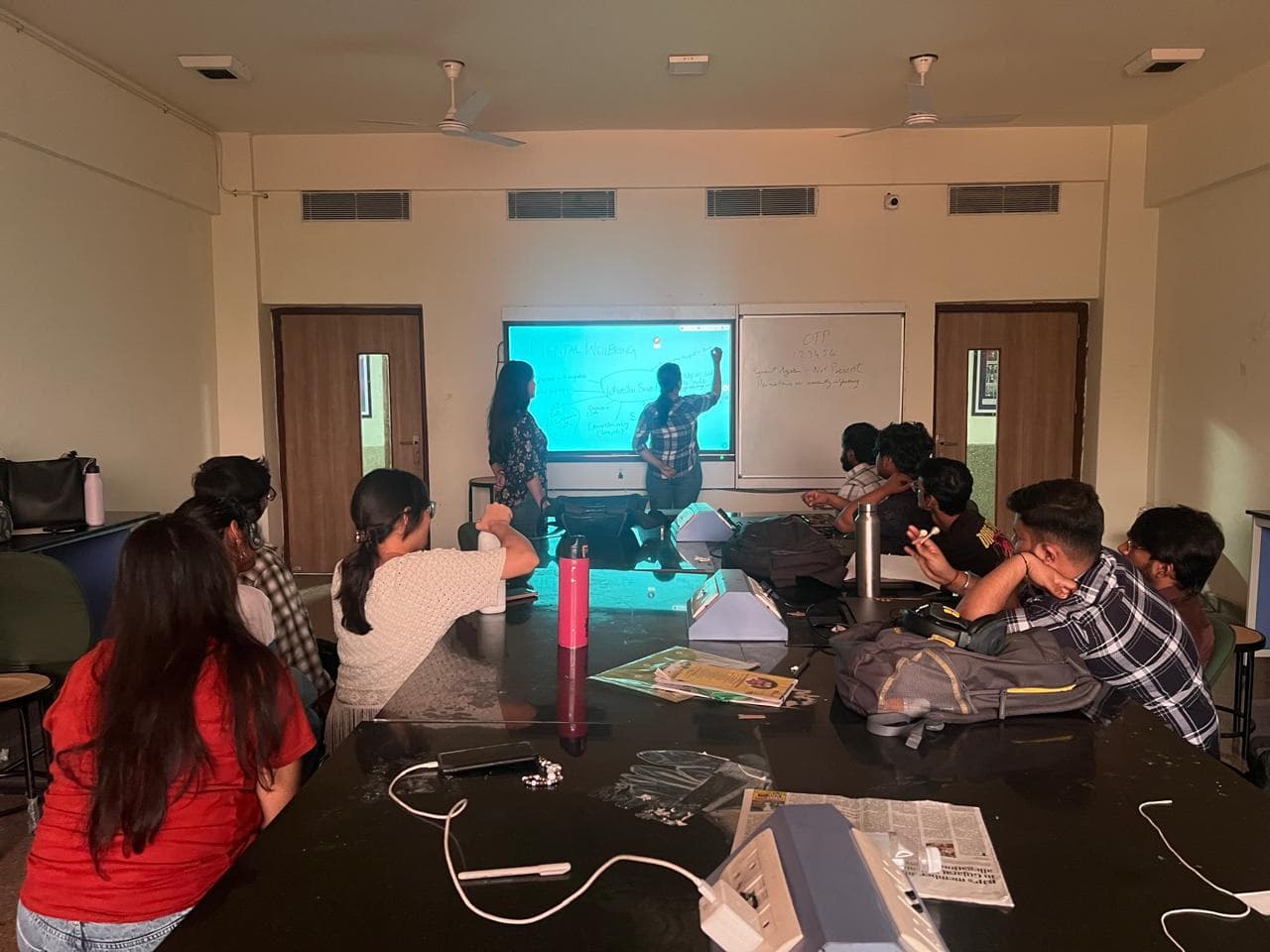
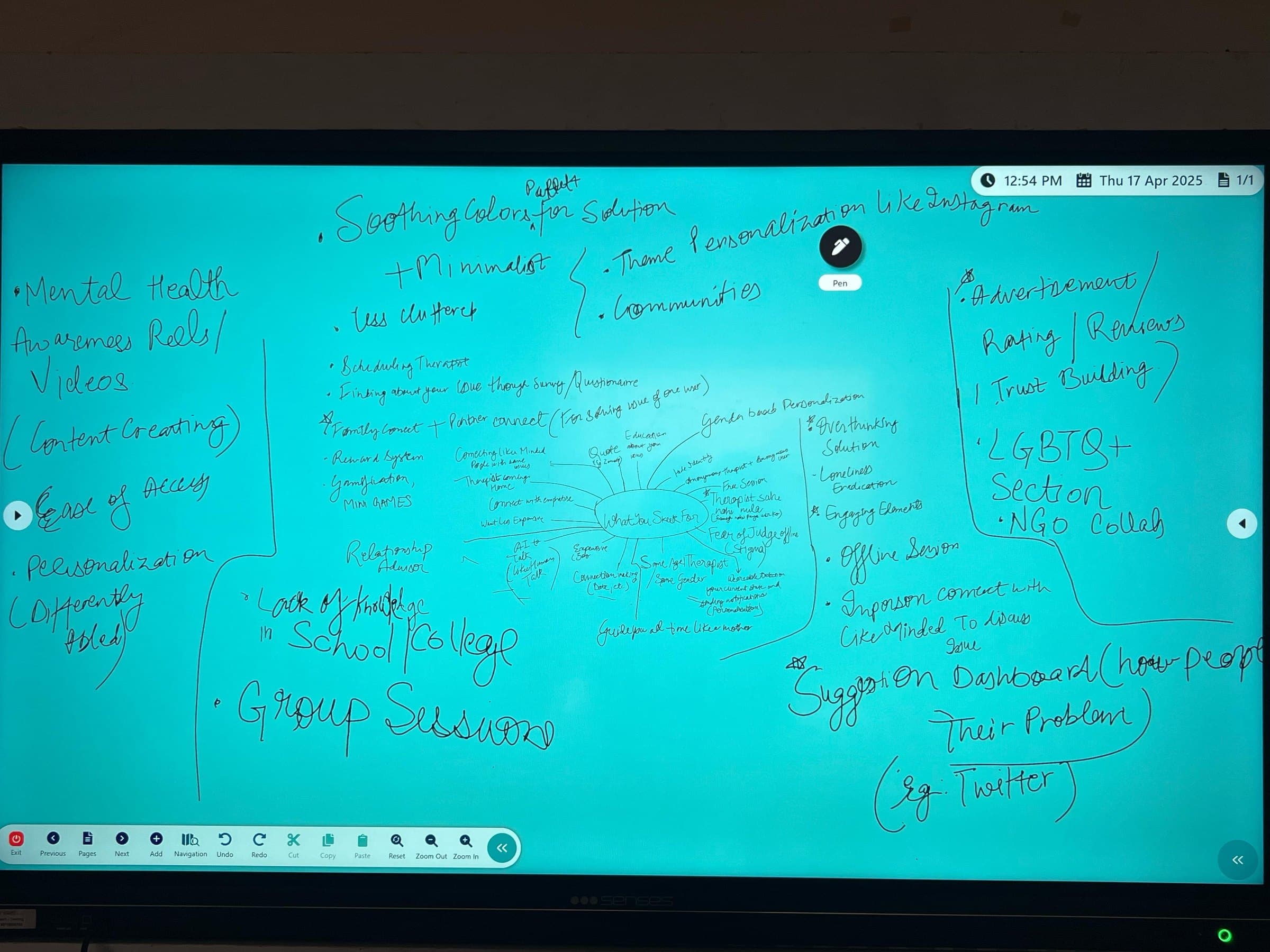
Brainstorming Session

Brainstorming workshop: a group of students around a table facing a projected screen, with two people presenting at the front of the room
Digital whiteboard from the session, photographed on screen: handwritten clusters of ideas on a teal canvas, including mental health awareness reels and videos, content creation, ease of access, personalization, group sessions, school and college, community, privacy, LGBTQ+ section, NGO collab and a suggestion dashboard

Insights

  • Therapy feels inaccessible
  • Stigma
  • Booking should be easy
  • Community Building
  • Group Therapy
  • Self Help Tools
  • Mood Tracking
  • Chat based support
  • Modern UI
  • Privacy First

Information Architecture

YANA
Take AssessmentYour Wellbeing Snapshot
Skip
  1. Home Screen
    • Notification
      Receive Notification
    • Community
      • Search Community
        Join Community
      • Start Community
    • Share Thoughts
      • Draw Something
      • Write Your Thoughts
        Post / Draft
        Search Others Post
        Like/Share
    • Mood Relaxer
      Watch Videos
  2. Minis
    Short Videos
    Connect with Therapists
  3. Therapy
    • Group Therapy
      Upcoming Therapies
      Pay and Confirm Booking
    • Individual Therapy
      Filter Option
      Choose Therapist
      Attend Free Session
      Confirm Therapist
      Proceed Further
  4. Journal
    • New Journal
    • Search Previous
  5. Profile
    • Settings
      • Edit Profile
      • Change Password
      • Languages
      • Legal and Policies
      • Help and Support
      • Logout
    • Your Posts
    • Progress Report
    • Take Assessment
    • Message Therapist

Mental Health Assessment using DASS-21

What is DASS-21?

  • A standardized tool that measures Depression, Anxiety and Stress using 21 self- reported questions. It helps us understand where the users mentally and what kind of support and guidance they need.
  • The DASS-21 was developed at the University of South Wales (UNSW), Australia, by Sidney Lovibond and Peter Lovibond

Why DASS-21 in YANA

  • Quick & Validated assessment.
  • Gives us a psychological snapshot.
  • Helps personalize self-help or therapy suggestions.
  • Non - invasive & easy to take.

How we Used it?

  • Shown at the start of User onboarding or mental health check - in.
  • Results stored securely and used to recommend self - help tools or therapist sessions.
  • Retaken periodically to track progress.
DASS-21 severity ratings by score
SeverityDepressionAnxietyStress
Normal0-90-70-14
Mild10-138-915-18
Moderate14-2010-1419-25
Severe21-2715-1926-33
Extremely Severe28+20+34+

NB Scores on the DASS-21 will need to be multiplied by 2 to calculate the final score.

04

Prototyping

See Yana in Action

A mental wellbeing experience designed to help people understand how they feel, explore the right support, and take small steps towards feeling better.

A more personal starting point

  • A safe spaceAnswer at your own pace
  • Personalized ExperienceContent and support adapted to you
  • Private and ConfidentialYour responses are always safe with us
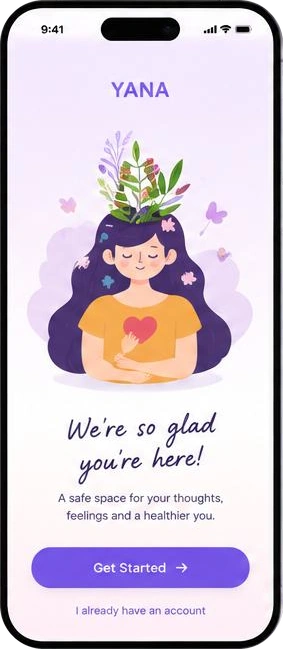
  1. YANA welcome screen: an illustrated woman with plants growing from her head, “We’re so glad you’re here!”, and a Get Started button
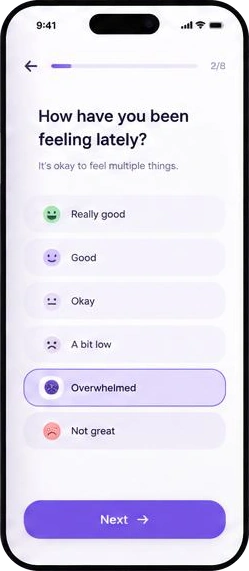
  2. Onboarding step 2 of 8, “How have you been feeling lately?”, with mood options from Really good to Not great and Overwhelmed selected
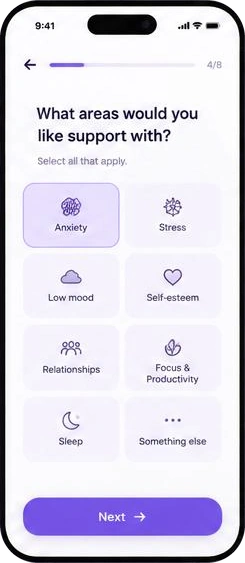
  3. Onboarding step 4 of 8, “What areas would you like support with?”, a grid of topics with Anxiety selected
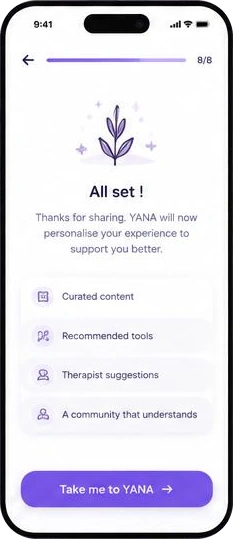
  4. “All set!” screen: YANA will now personalise curated content, recommended tools, therapist suggestions and community, with a Take me to YANA button

A home that meets you where you are

YANA adapts to your mood, interests and needs - bringing personalized content, tools and a supportive community, all in one place

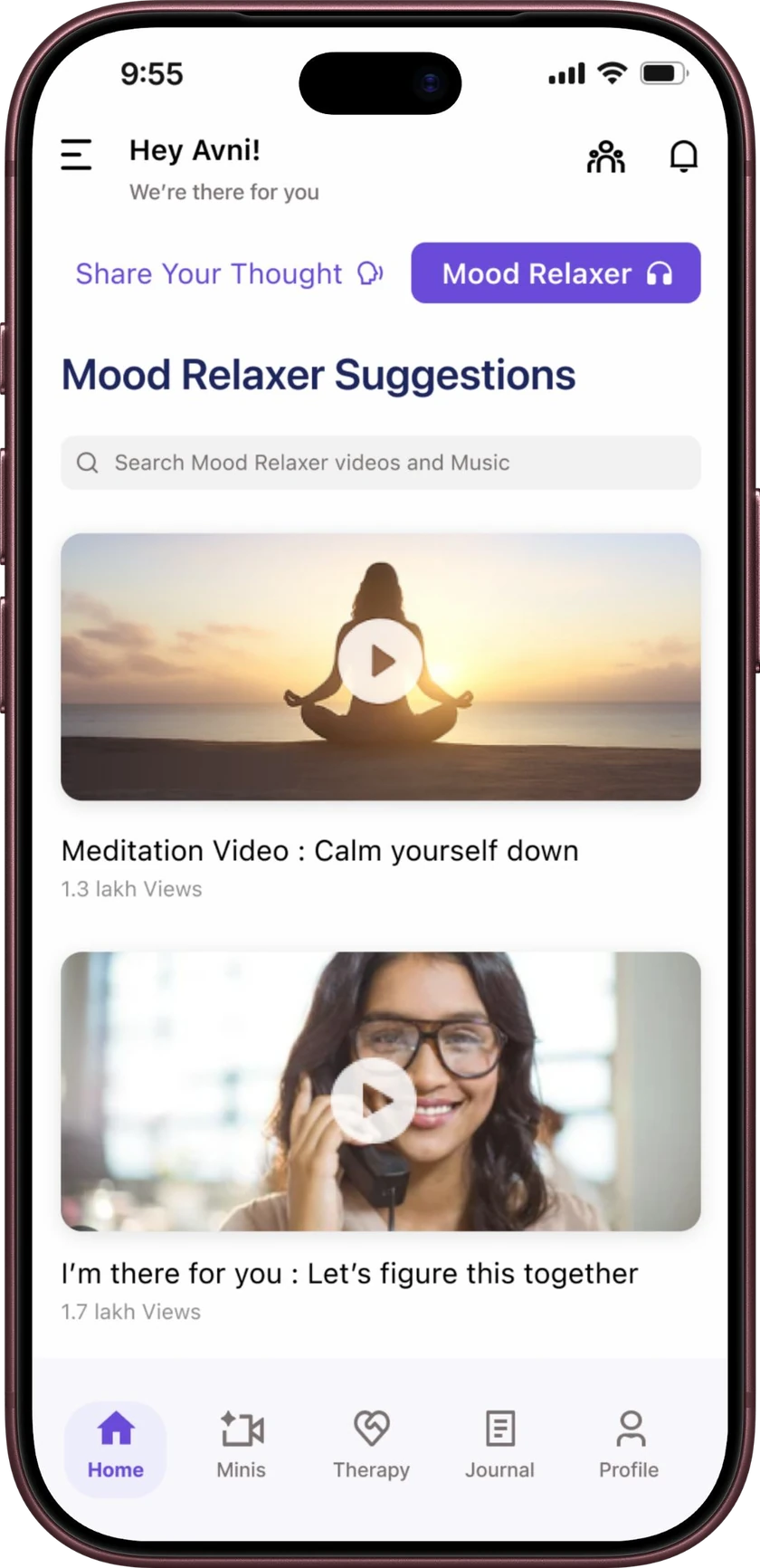
  1. Home screen on the Mood Relaxer tab: Mood Relaxer Suggestions with a meditation video and a therapist video
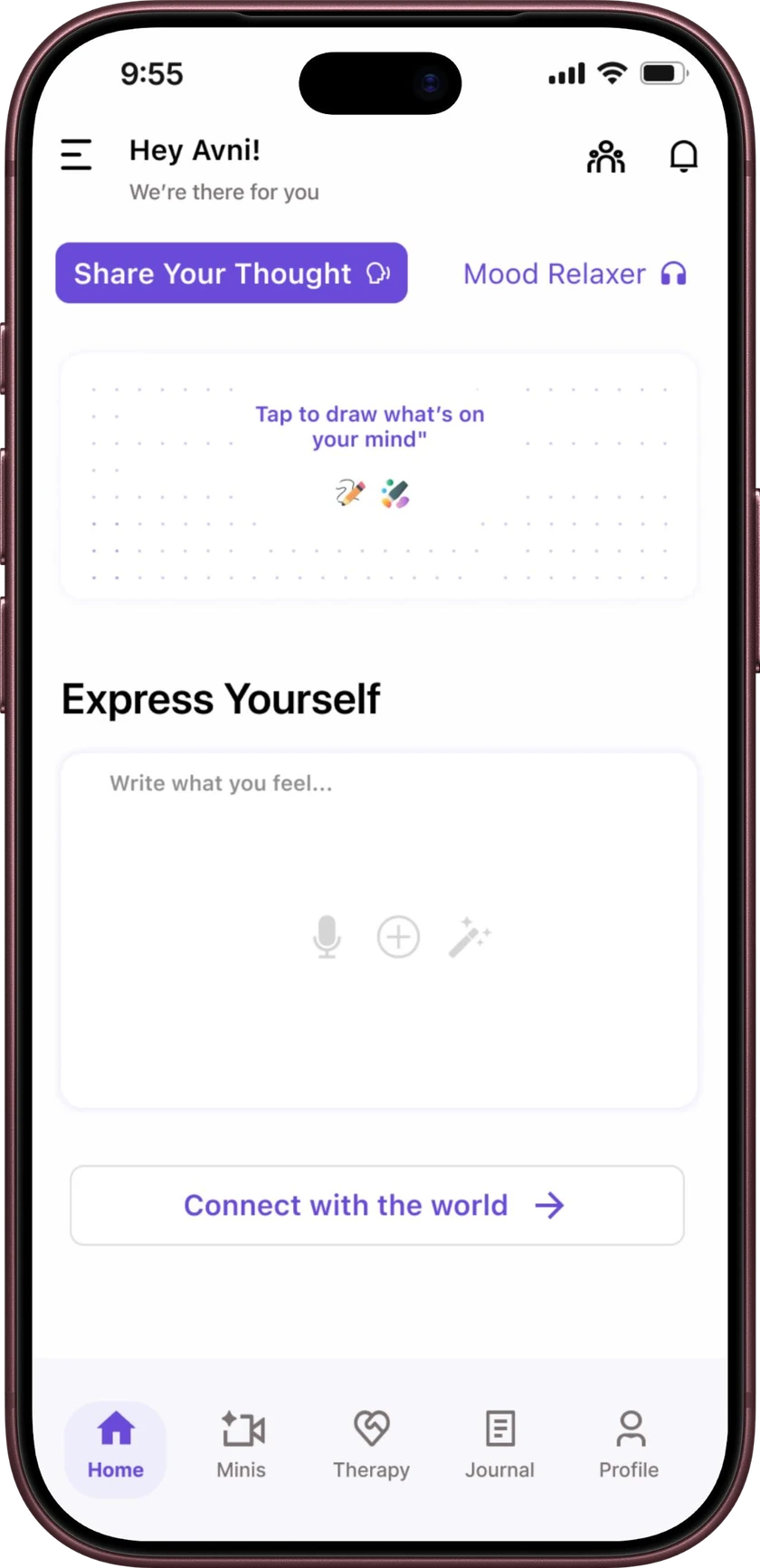
  2. Home screen on the Share Your Thought tab: a drawing canvas and an Express Yourself text box, with Connect with the world
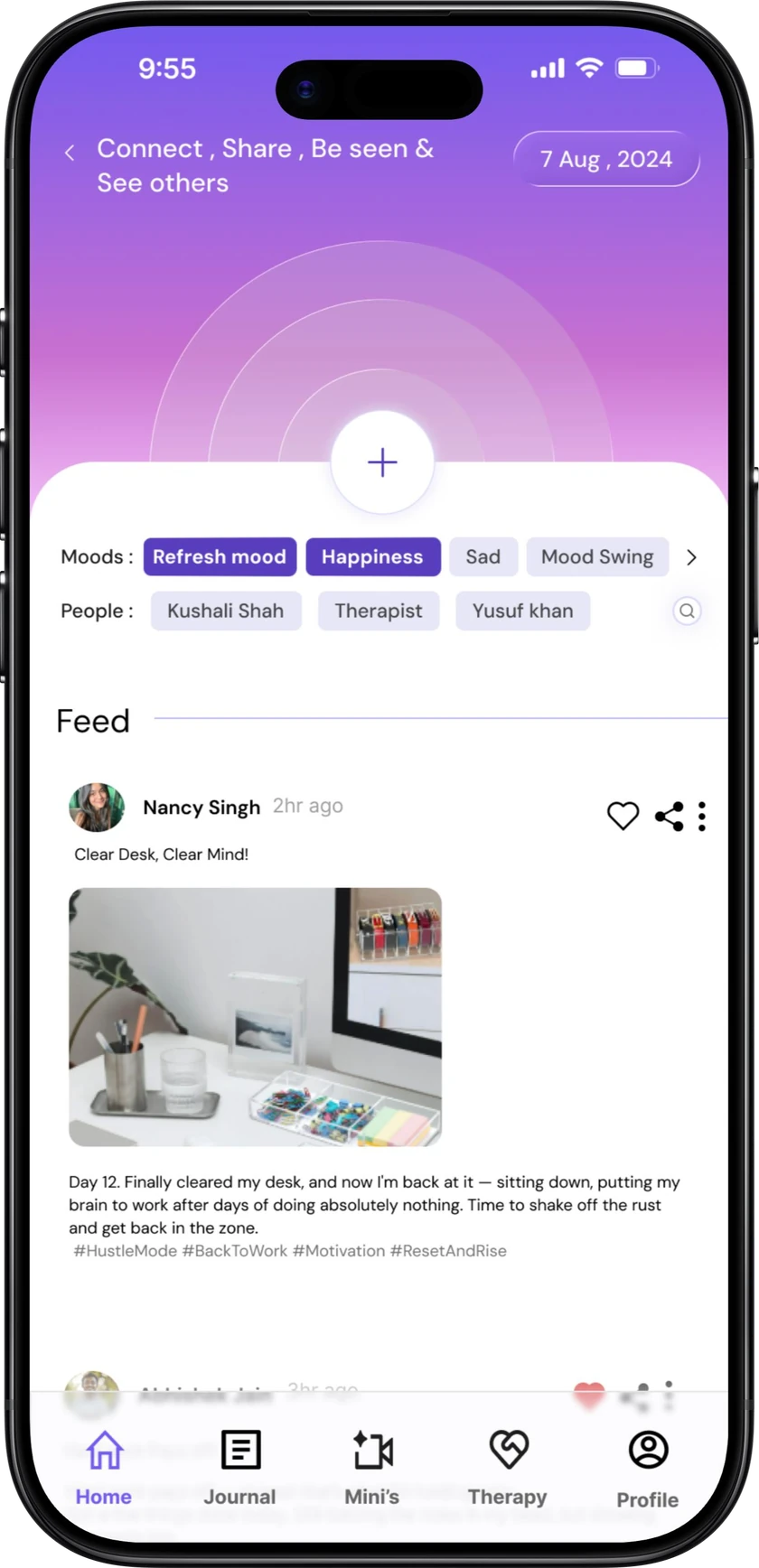
  3. Community feed: Connect, Share, Be seen & See others, mood and people filters, and a post from Nancy Singh
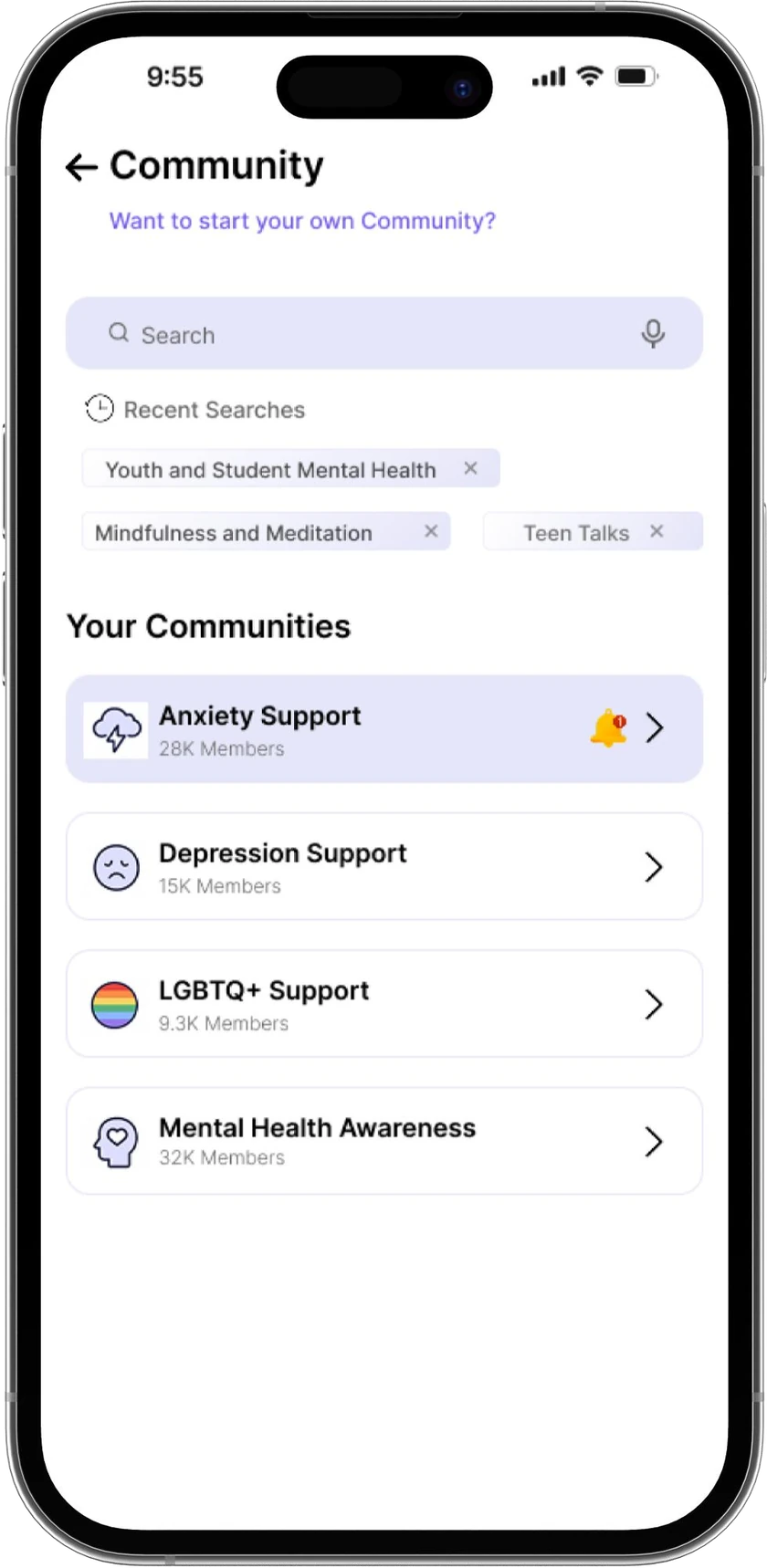
  4. Community screen: search, recent searches and Your Communities — Anxiety, Depression, LGBTQ+ Support and Mental Health Awareness

Small moments, big progress

Journal explore bite-sized content and build habits - designed to help you reflect, learn and feel a little better everyday, along with therapist led mini’s

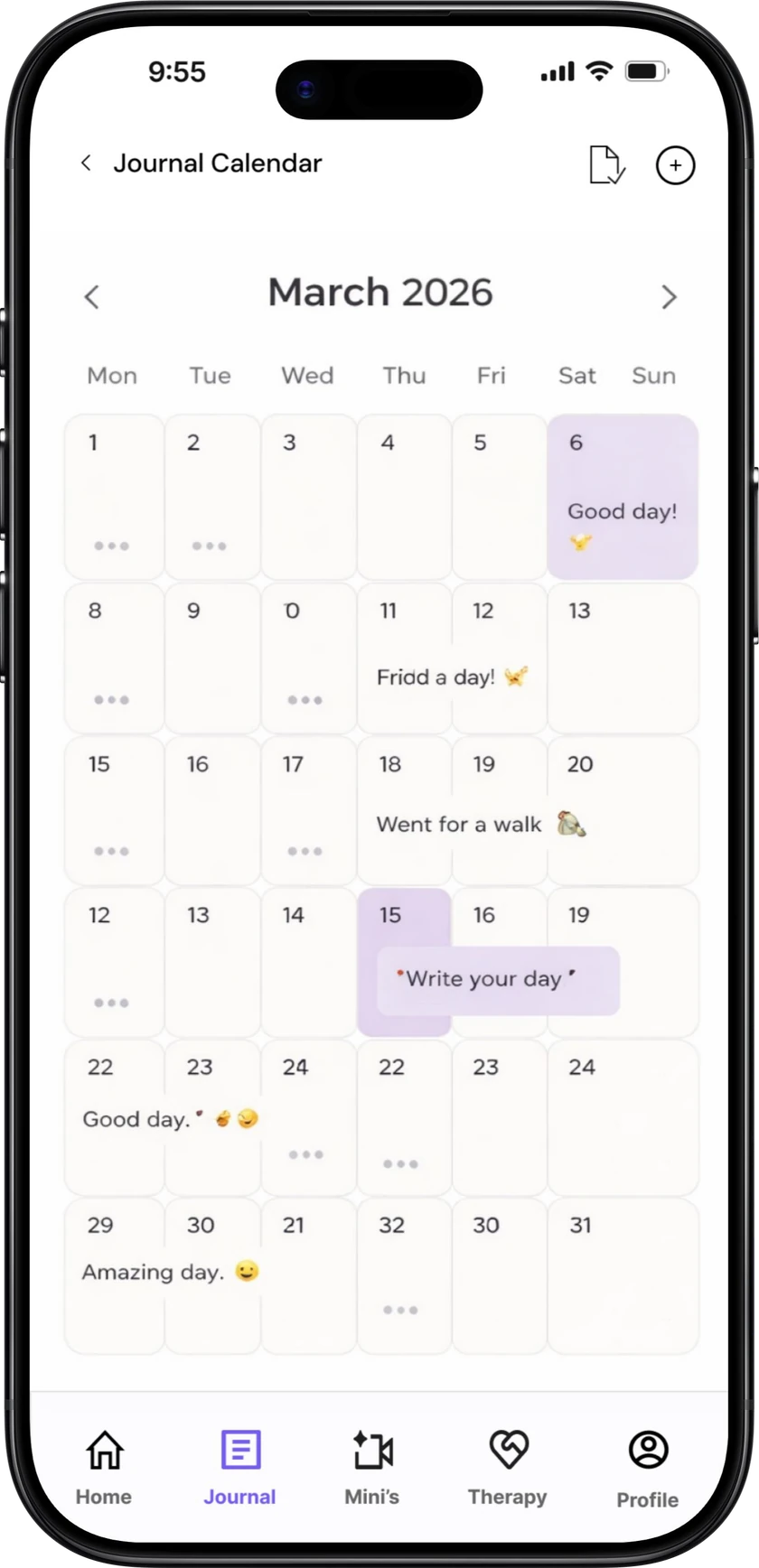
  1. Journal Calendar for March 2026 with short notes on several days

    Journal Calendar

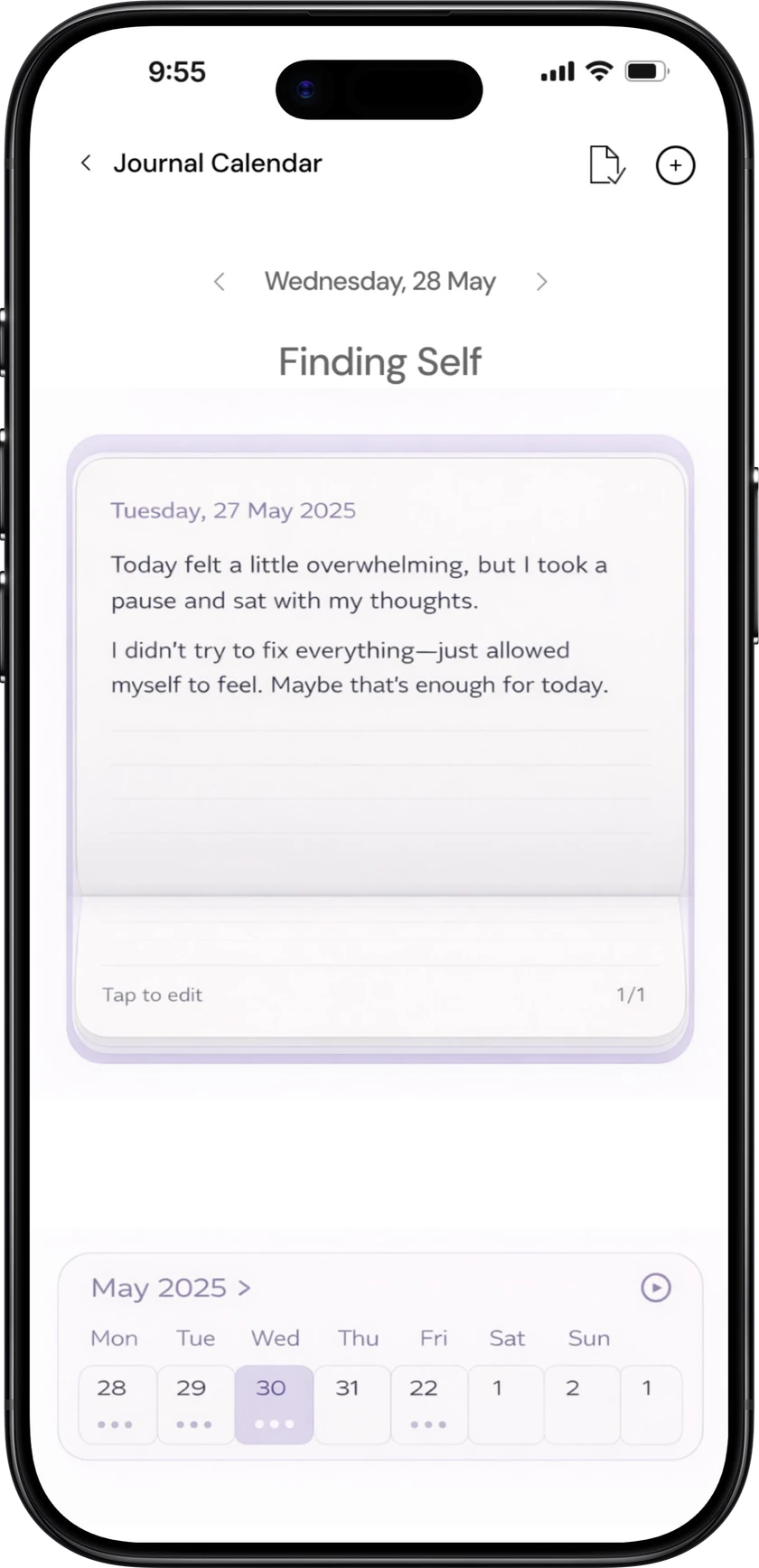
  2. Journal entry “Finding Self” from 27 May 2025, with a week strip below

    Journal Entry

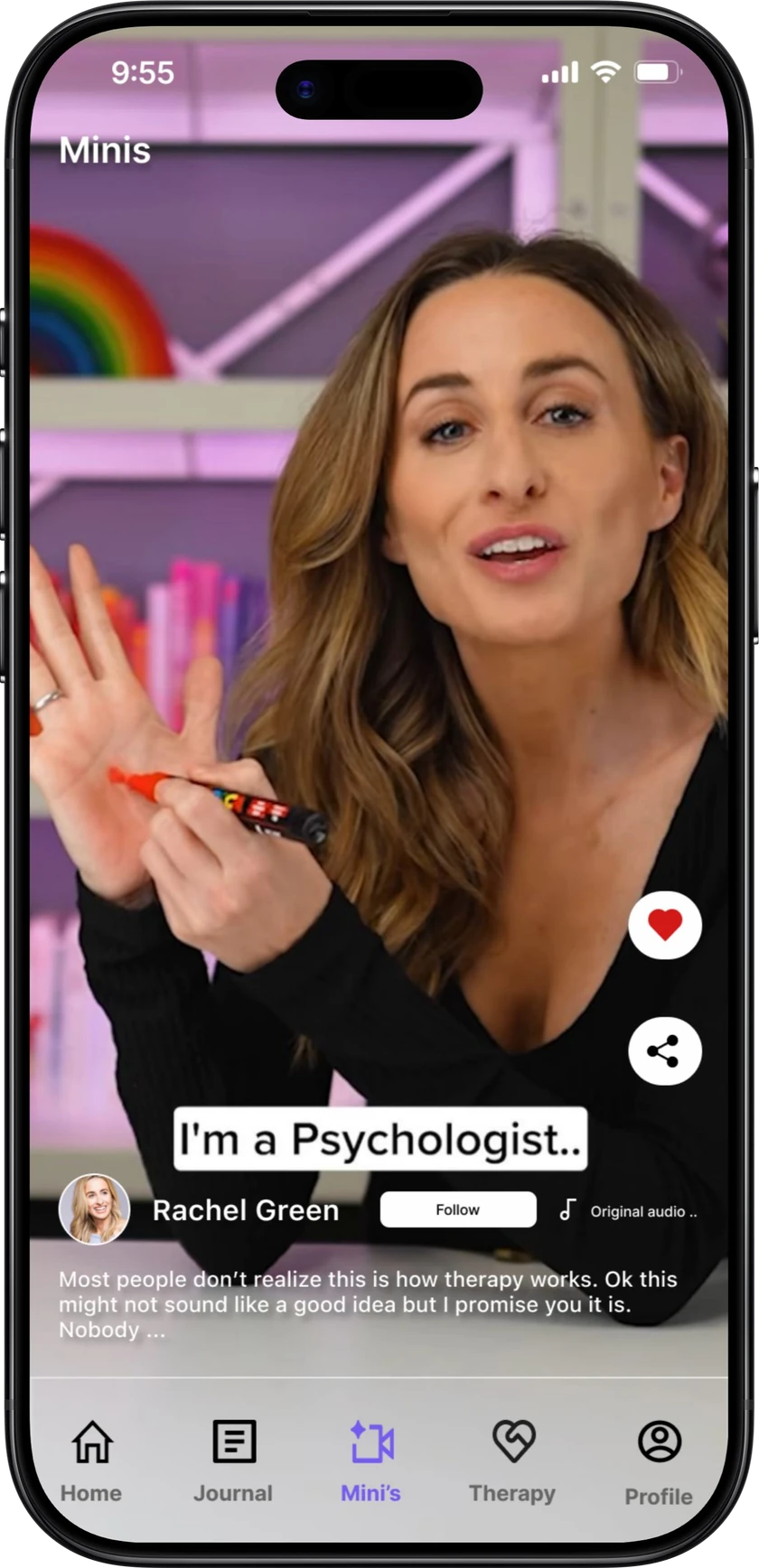
  3. Minis: a short vertical video from psychologist Rachel Green, with like and share actions

    Minis

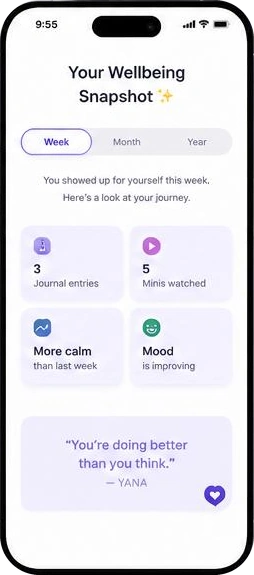
  4. Your Wellbeing Snapshot for the week: 3 journal entries, 5 minis watched, more calm than last week, mood improving

    Your Wellbeing Snapshot

Find the right support for you

YANA helps you discover qualified therapists and group sessions that matches your preferences and comfort level

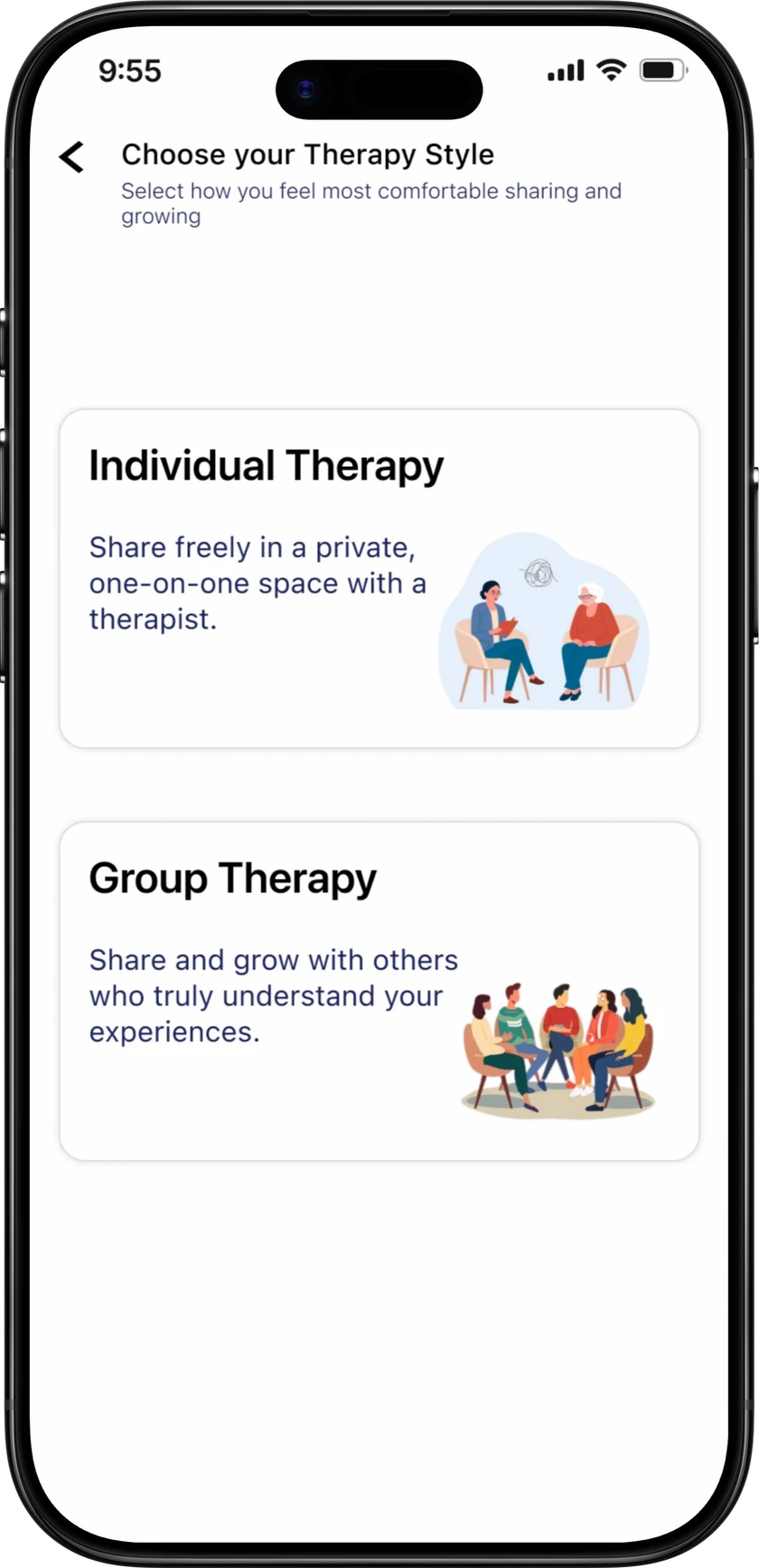
  1. Choose your Therapy Style: Individual Therapy or Group Therapy cards

    Choose Your Therapy Style

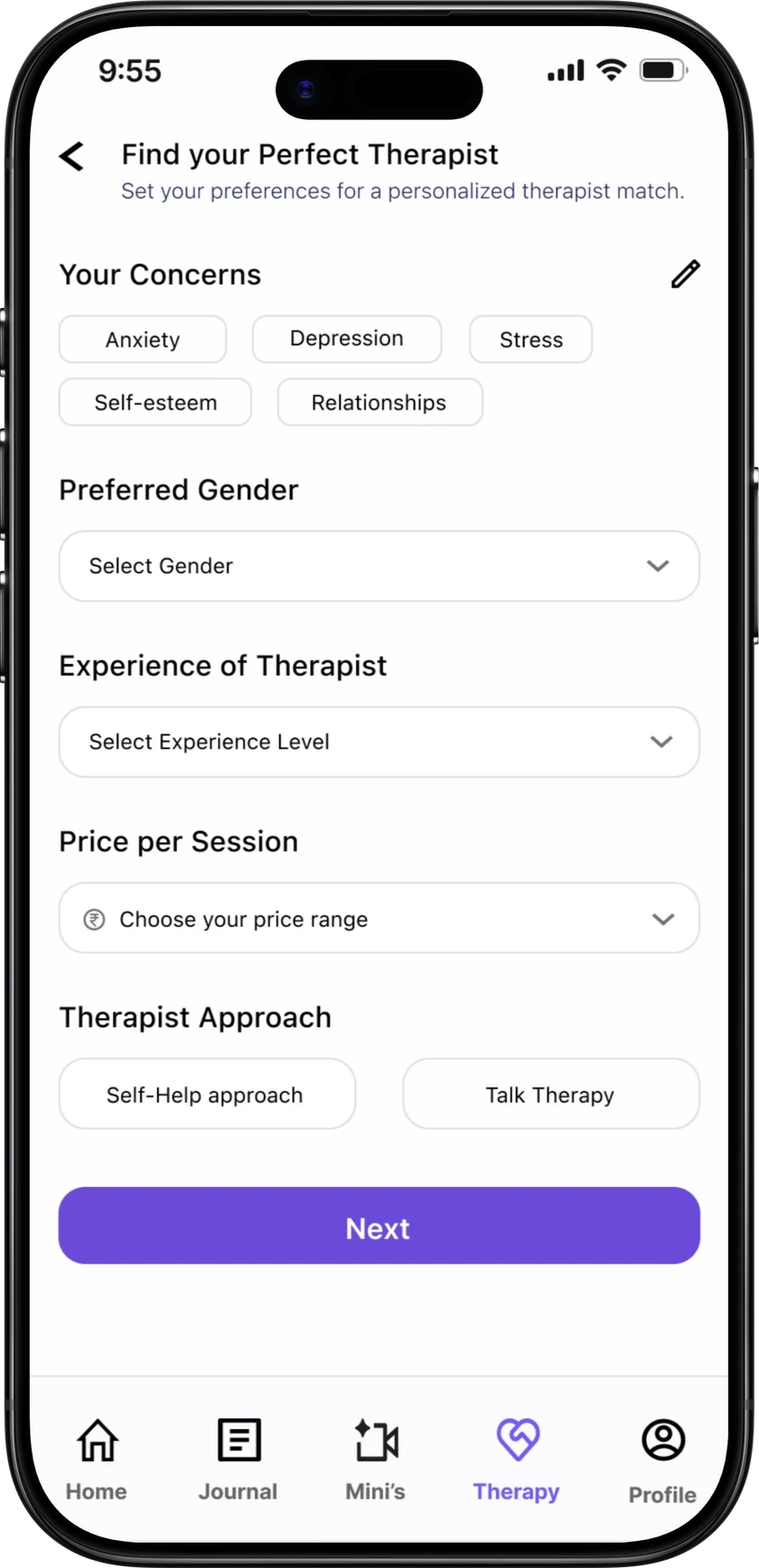
  2. Find your Perfect Therapist: concerns, preferred gender, experience, price per session and therapist approach

    Find Your Perfect Therapist

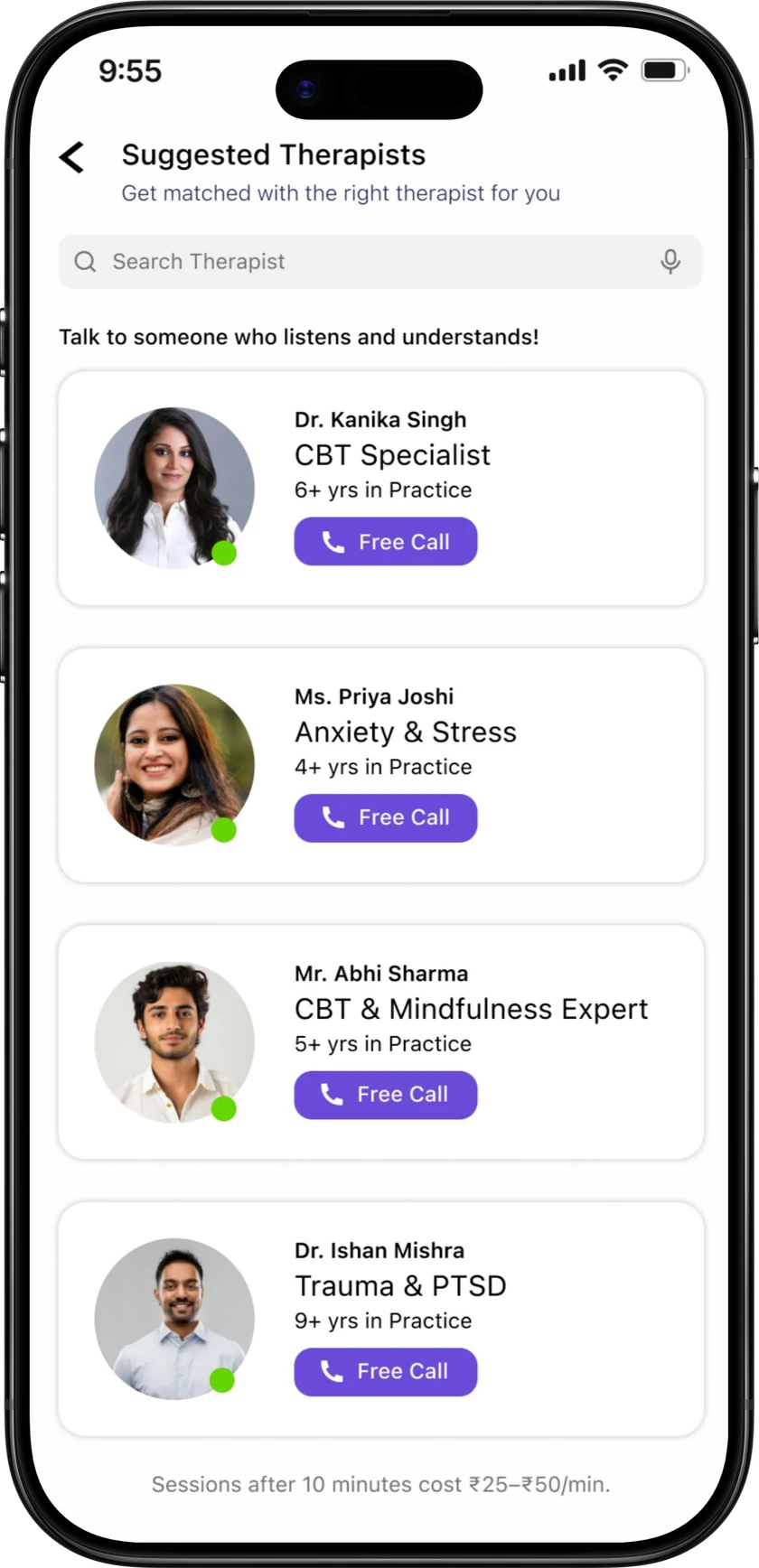
  3. Suggested Therapists: four therapist cards, each with specialty, years in practice and a Free Call button

    Suggested Therapists

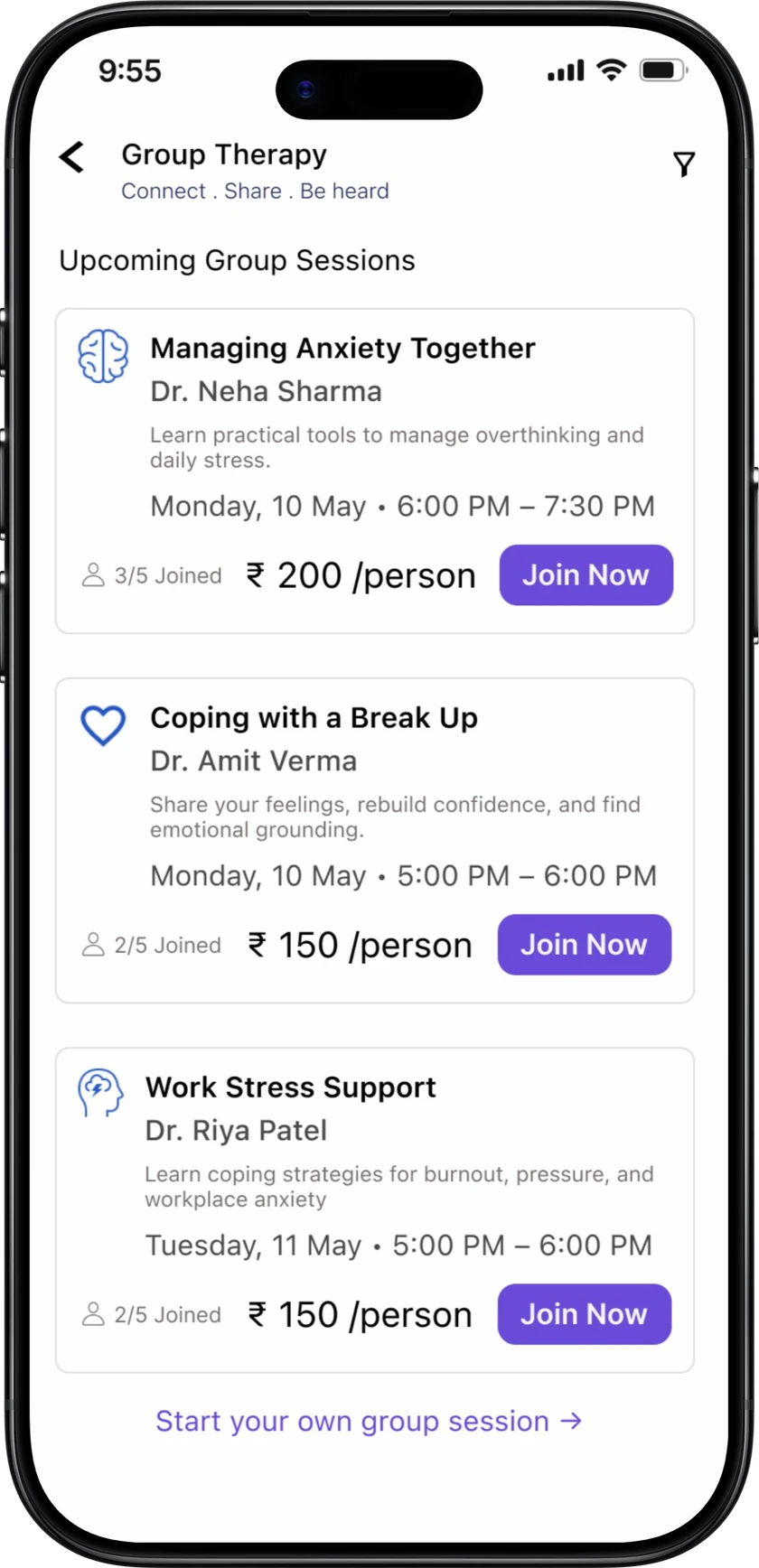
  4. Group Therapy: upcoming group sessions with host, time, seats joined, price per person and Join Now

    Group Therapy

Everything in one place

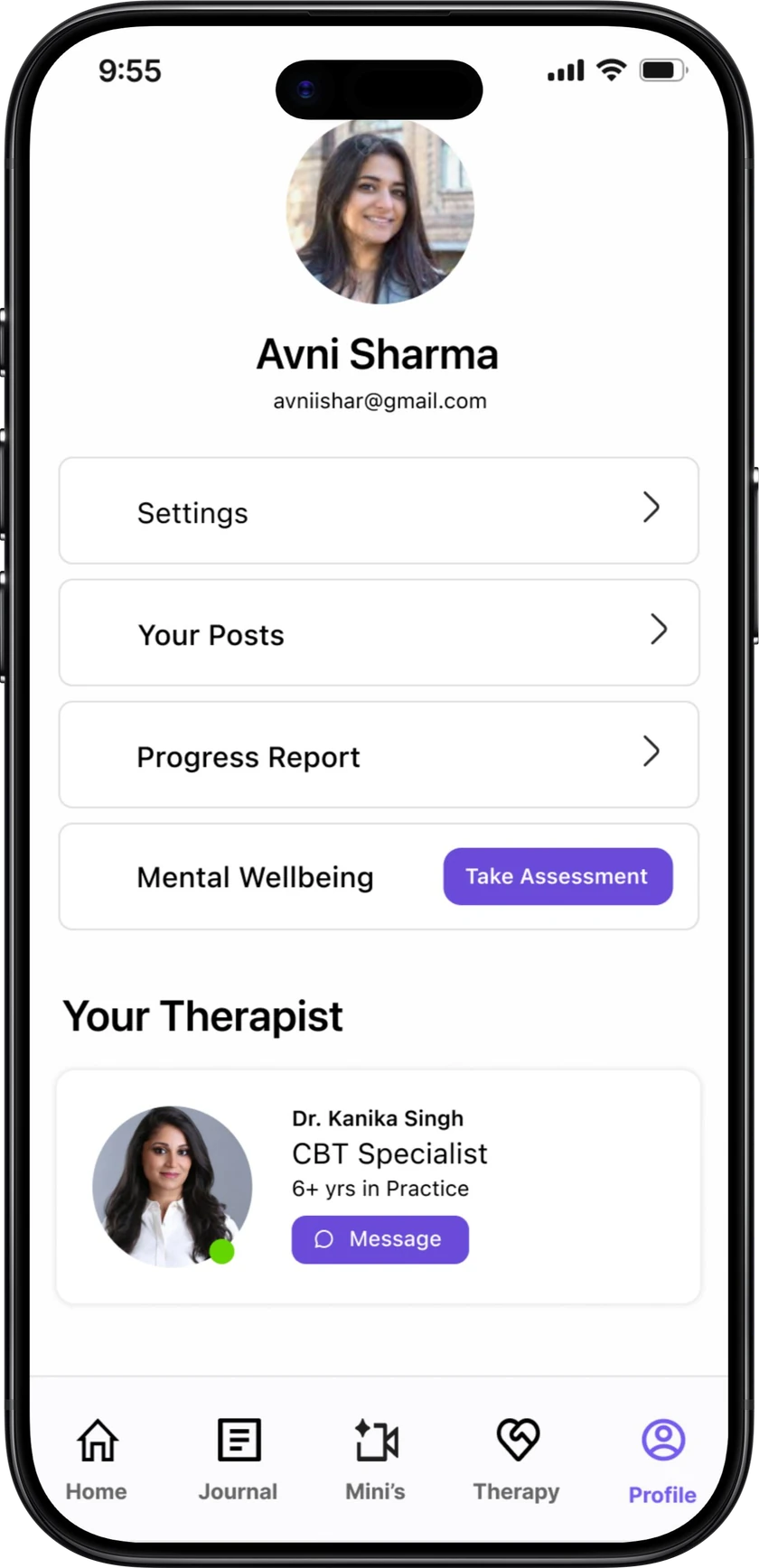
Your profile is more than just settings - it’s your personal space to manage your wellbeing, connect with your therapist, and keep track of your journey

  1. Profile: Settings, Your Posts, Progress Report, Mental Wellbeing with Take Assessment, and Your Therapist with a Message button

    Profile

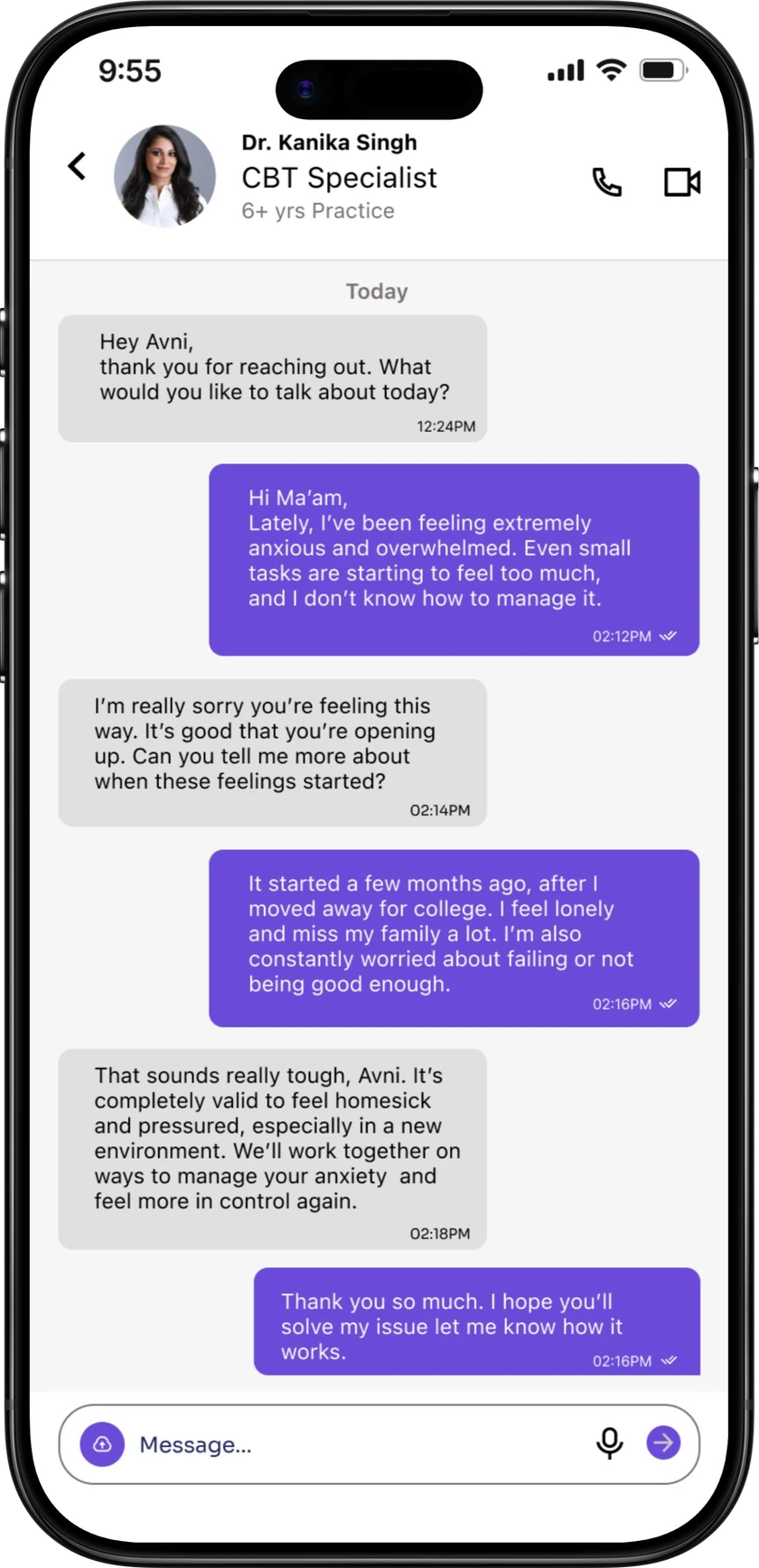
  2. Chat with Dr. Kanika Singh, CBT Specialist: a supportive conversation thread

    Therapist Chat

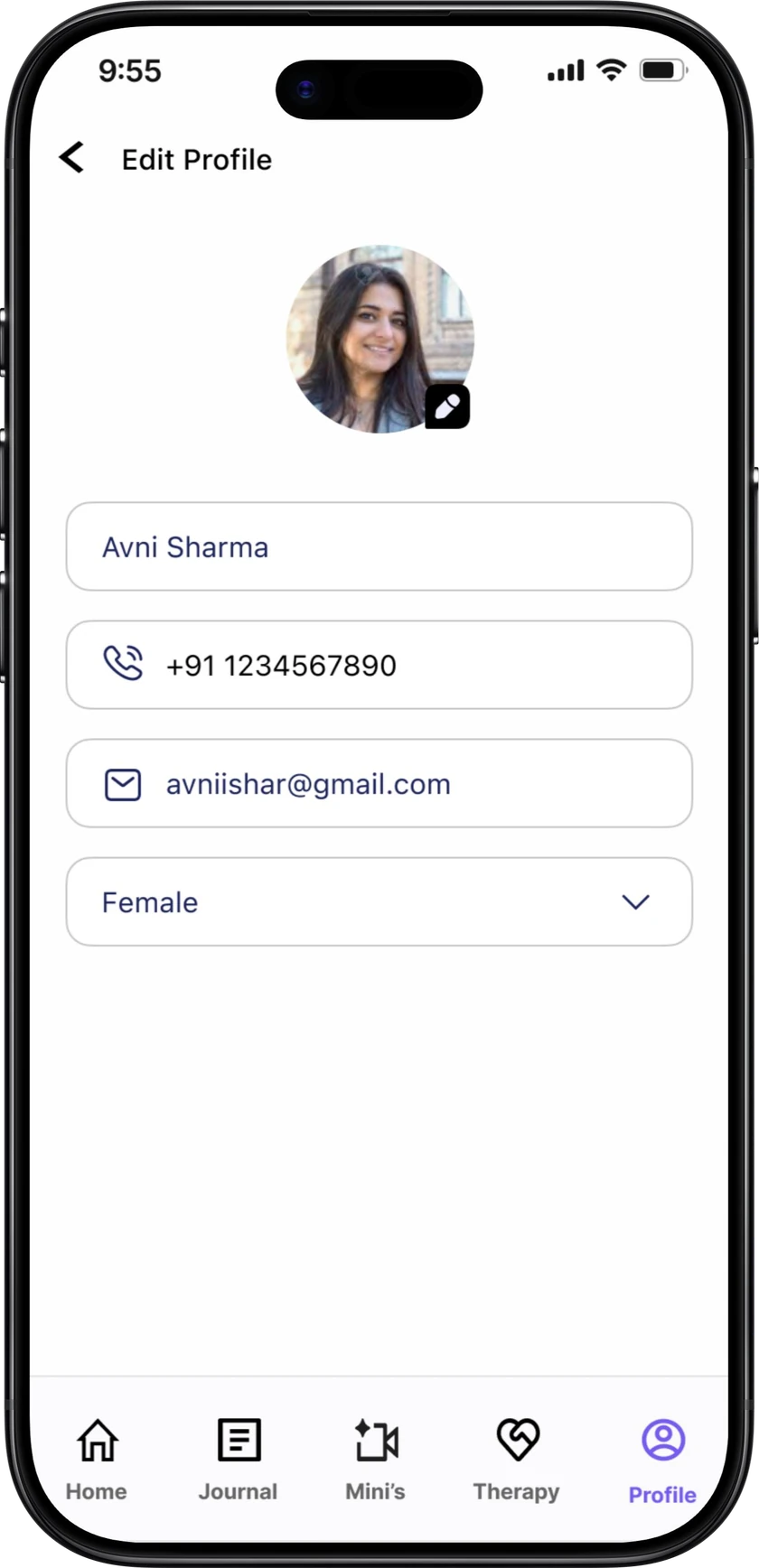
  3. Edit Profile: name, phone number, email and gender fields

    Edit Profile

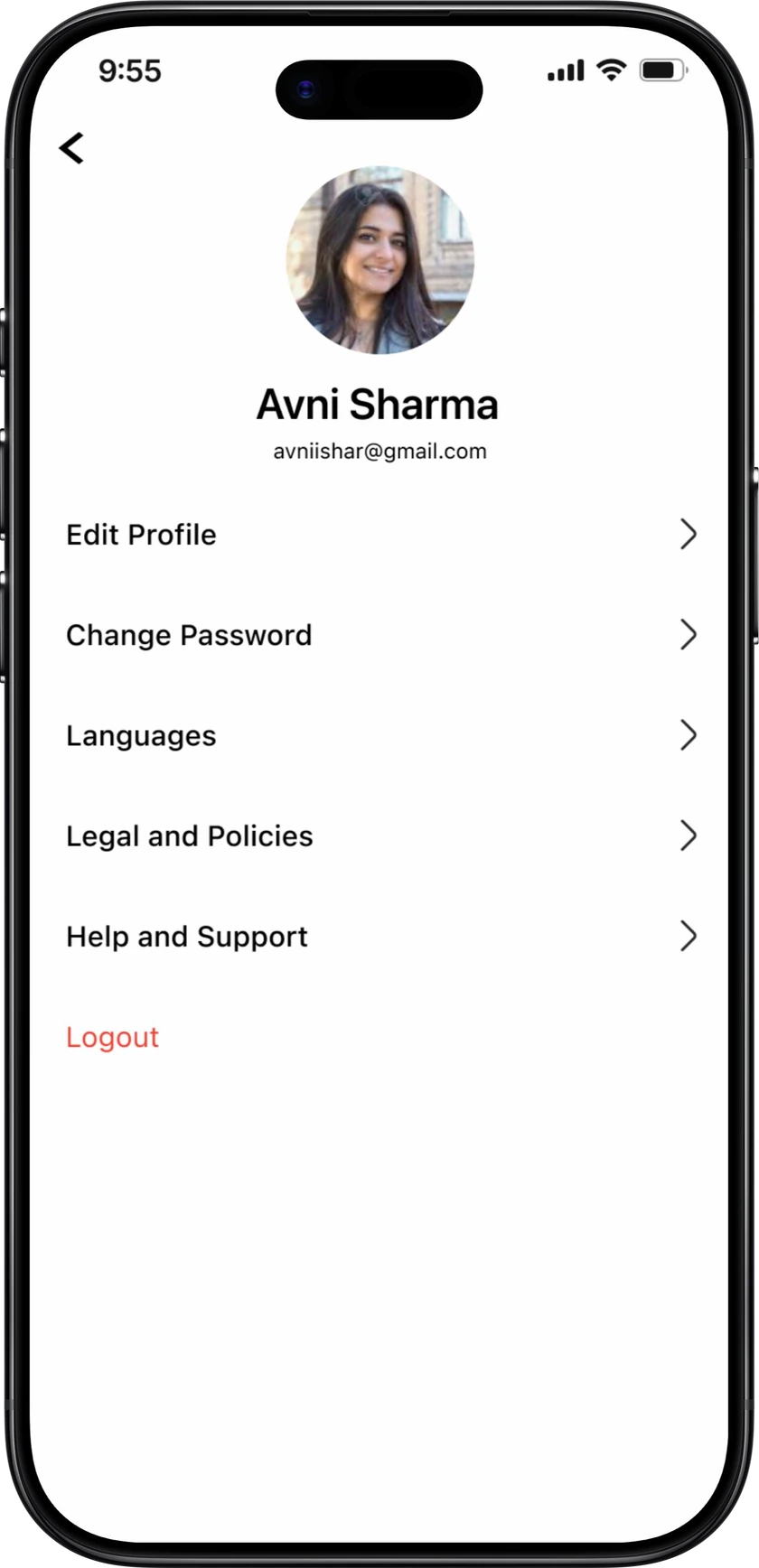
  4. Profile settings: Edit Profile, Change Password, Languages, Legal and Policies, Help and Support, Logout

    Settings